The banjo you should buy depends on the music you want to play and how far you expect to take it. These are the brands we recommend most — from a first bluegrass banjo to a heirloom you keep for life.
The Sleepy Man team· Editors
Independent gear research
Jul 8, 2026
12 min · 5 brands
$
Some links are affiliate links — if you buy through them we may earn a small commission. It never costs you more, and it never changes our picks. Our rankings come from researching specs, setup quality and owner feedback, not from hands-on testing.
The short version
If you want one recommendation and you are past your first month: buy a Deering Goodtime 2. It is the most consistent playing, best-holding-value banjo in the under-$700 range. On a tighter budget, the Recording King Dirty 30’s gives you 90% of the tone for two-thirds of the money.
We weight how consistently a banjo arrives playable, tone, build quality, and value at each price — drawn from published specifications, setup reports from techs and teachers, and what long-term owners say. We do not play these banjos ourselves, and a commission never moves one up the list. If you already know your budget and just want to know where to buy, jump to our where to buy a banjo guide for new and used options.
Before you buy
Whatever brand you choose, budget $40–60 for a proper setup from a tech. It levels the action and dresses the frets — and it matters more to how a banjo plays than the last $100 of the price.
The brands, ranked
The score rates the instrument on its own terms. The order is what we would actually recommend, so a higher-scoring banjo can sit lower when a cheaper one gets you most of the way there.
1
Best overall
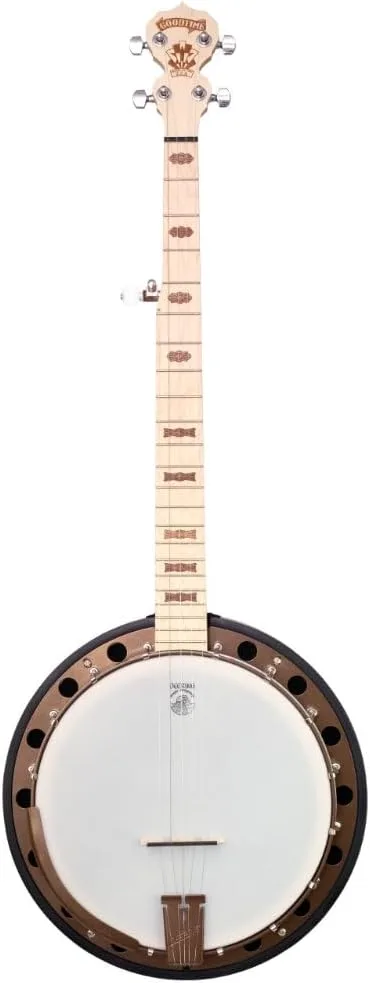
Deering Goodtime 2
Deering · USA-made resonator
4.8/5
Editor's score
The one we point most players to once they are serious. A genuine resonator, a slick USA-made neck, and resale value nothing in its class matches. It plays in tune and sounds like a banjo should.
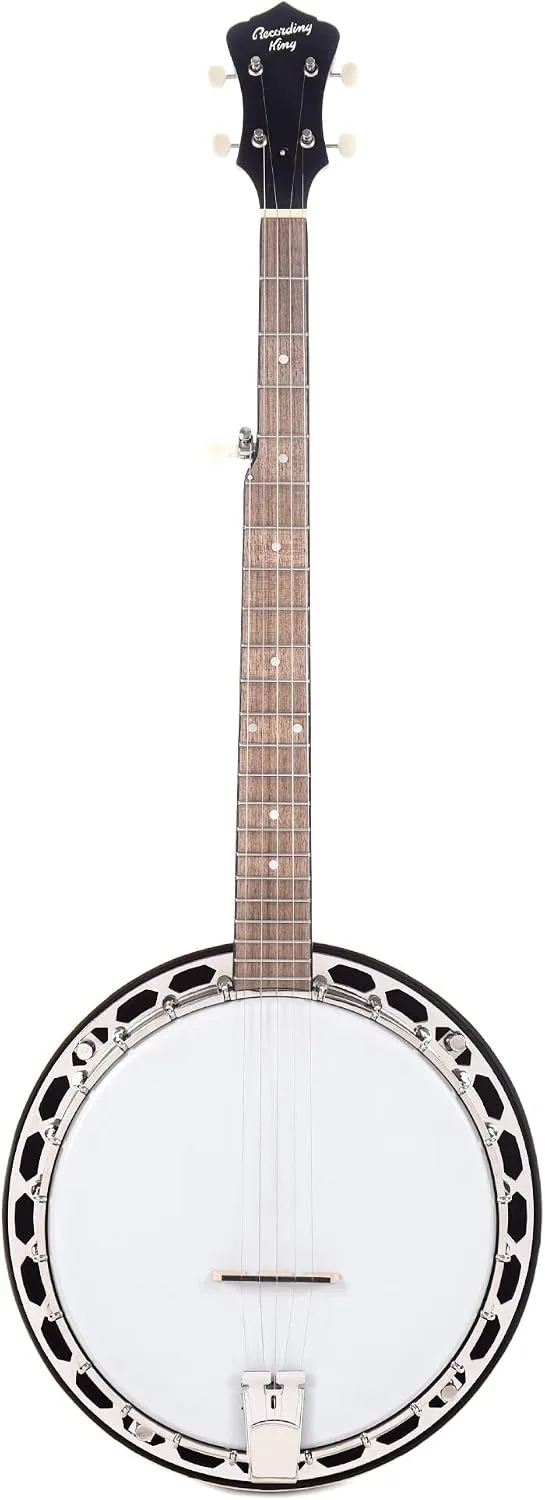
The value play. A rolled tone ring gives it more bark than anything else near $400, and the setup is honest. If money is tight but you still want bluegrass punch, start here.
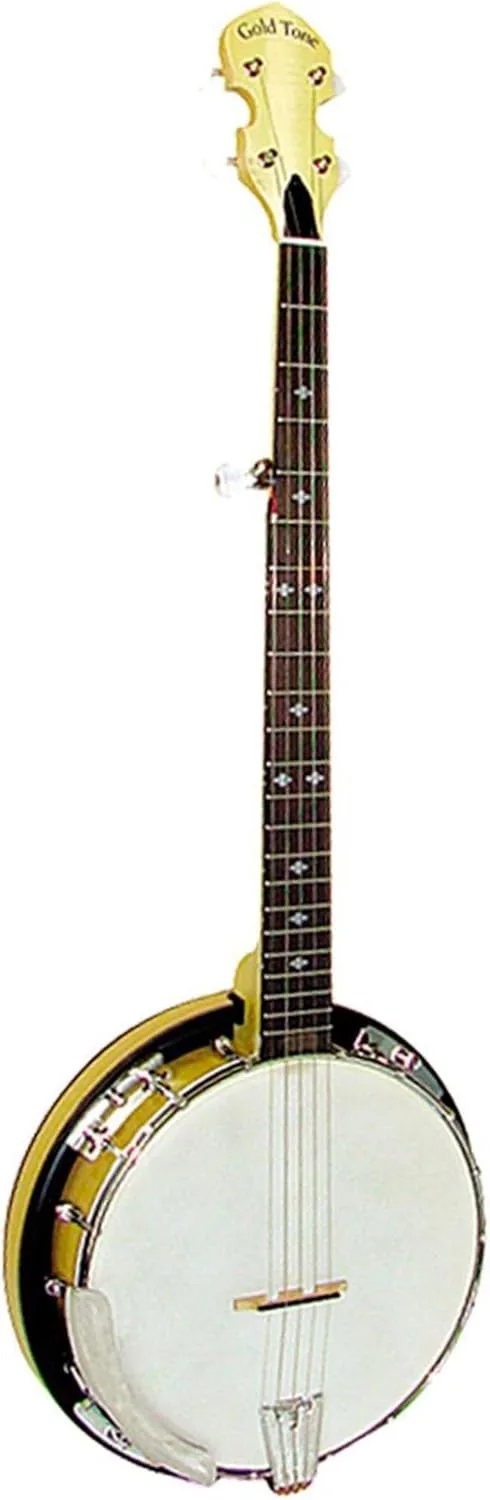
The friendliest true resonator for a first banjo. The factory setup is the best in its class, so you play it out of the box instead of paying for a setup first.
These three make the instruments most people actually start on. What separates them from the cheap end of the market is not tone so much as consistency — they arrive playable, they hold a tuning, and they do not put beginners off in the first month.
Gold Tone
Gold Tone covers more ground than any other maker on this list, from a composite-rim open-back you can buy for a couple of hundred dollars up to the Orange Blossom professional instruments. What they are best known for is getting a genuinely playable banjo into the hands of someone who has never owned one — the factory setup on the Cripple Creek line is consistently reported as the best in its price bracket, which matters more to a beginner than any spec on paper.
They also build the things other makers ignore: banjoleles, six-string banjos, cello banjos and open-backs aimed squarely at clawhammer players. If you want something other than a standard bluegrass five-string, Gold Tone is usually the first place to look.
Gold Tone · at a glance
Founded1993 — Wayne and Robyn Rogers, Titusville, Florida
Known forPlayable instruments at reachable prices; unusual variants
Notable modelsAC-1, Cripple Creek CC-100R, Orange Blossom series
Typical street price$270 – $3,800
Who it suits: First-time buyers who want a real instrument rather than a toy, and anyone after a banjo outside the standard five-string.
Recording King
Recording King is worth understanding properly, because the history is often stated wrongly. The name belonged to Montgomery Ward, who sold catalogue instruments under it in the 1930s — some built by Gibson. The modern company revived the brand decades later, so a Recording King banjo is not a continuously produced line with a ninety-year history; it is a modern instrument wearing a historic name.
What it does well is deliver pre-war specification at a fraction of pre-war cost. The Elite line copies the details that matter for that sound — a Mastertone-style tone ring, a steam-bent three-ply maple rim, and the longer 27-3/8in scale that gives the instrument its extra punch. Further down the range, the Dirty 30’s puts a rolled tone ring in a banjo that sells around $400.
Recording King · at a glance
Origin1930s Montgomery Ward house brand; name revived in the 2000s
Known forPre-war styling and specification at modern prices
Notable modelsDirty 30's, Madison, Songster, Elite series
Typical street price$400 – $1,800+
Who it suits: Players who want pre-war bluegrass bark without paying vintage prices.
Deering
Deering is the largest banjo maker in the United States, and unusually it makes nothing else — no guitars, no mandolins. That focus shows in how consistent the instruments are from one unit to the next, which is the single most useful property a brand can have when you are buying online and cannot play the specific instrument first.
The Goodtime series is the entry point and the reason Deering appears in almost every beginner recommendation: it is US-built, it arrives playable, and it holds its money. Above that, the Sierra and Eagle II add tone rings, heavier hardware and the projection a bluegrass player eventually wants. Resale is the quiet argument for buying one — a used Goodtime sells quickly and close to what it cost.
Deering · at a glance
Founded1975 — Greg and Janet Deering, Spring Valley, California
Known forUS manufacture, consistency, and the strongest resale in the category
Notable modelsGoodtime series, Sierra, Eagle II
Typical street price$580 – $10,000+
Who it suits: Anyone who wants a US-made instrument that holds its value. The Goodtime is the standard buy-once beginner pick.
Luxury banjo brands
Past roughly $2,000 you stop paying for playability — a well-set-up $500 banjo already plays in tune — and start paying for tone-ring craftsmanship, wood, hand work and resale. These are the makers worth knowing at that end of the market.
Gibson
Gibson matters to banjo players for one reason above all others: the pre-war flathead Mastertone. Instruments built in the 1930s, and the RB-style flatheads in particular, are the tone the entire bluegrass world still measures itself against — largely because Earl Scruggs played one, and every player since has been chasing that sound.
Modern Gibson banjo production has been intermittent rather than continuous, so in practice most Gibson banjos change hands on the used and vintage market rather than through dealers as new stock. Prices reflect era and specification far more than condition: a genuine pre-war flathead sits in a different market altogether from a 1970s or 1990s instrument.
Gibson · at a glance
OriginOrville Gibson built from the 1890s; company incorporated 1902
Known forThe pre-war flathead Mastertone — the bluegrass reference tone
Notable modelsMastertone (RB-style), Earl Scruggs Standard
Typical price$1,500 – $15,000+, mostly used and vintage
Who it suits: Collectors and working professionals chasing a specific historical tone. Not a first banjo, and not a casual purchase.
Ome
Ome instruments are built to order, which makes the model names less like fixed products and more like starting points. Rim, tone ring, neck profile, scale length, wood and inlay are all specified at the point of ordering, so two banjos with the same model name can be substantially different instruments.
The reputation is strongest among clawhammer and old-time players, where the open-back models are widely regarded as some of the best available new. Chuck Ogsbury’s history goes back further than the OME name suggests — he founded ODE Banjos in 1960 and sold it before starting OME a decade later, which is why you will sometimes see both names discussed together.
Ome · at a glance
FoundedChuck Ogsbury — ODE in 1960, OME in 1970, Boulder, Colorado
Known forBuilt to order; strong following among old-time players
Notable modelsJuniper, Flora, Sweetgrass
Typical price$2,500 – $8,000 depending on specification
Who it suits: Players who already know what they want from an instrument and want it built that way.
Nechville Musical Products
Nechville is the most deliberately unconventional maker here. The Heli-Mount system replaces the traditional hoop, bracket and shoe assembly with a threaded design, which changes how the head is tensioned and makes the neck geometry adjustable in a way a conventional banjo’s is not. Head changes take minutes rather than an afternoon.
That engineering comes with looks that depart from the traditional banjo silhouette, which is genuinely divisive — some players find them the most comfortable instruments they have owned, others cannot get past the appearance. The sound is well regarded either way.
Nechville Musical Products · at a glance
Founded1989 — Tom Nechville, Minnesota
Known forThe Heli-Mount design; adjustable neck geometry
Notable modelsPhantom, Saturn, Zeus
Typical price$2,550 – $15,000
Who it suits: Players who value adjustability and serviceability over traditional appearance.
Prucha
Průcha is unusual in the industry for making almost all of its own hardware — tone rings, tension hoops, flanges and tailpieces — rather than buying components in, which most builders at every price level do. That vertical integration is the main reason the instruments are as consistent as they are.
The tone is pre-war-influenced rather than experimental, and the instruments have built a loyal following among European bluegrass players in particular. The Student line is the accessible entry; Legend and Pioneer sit at the professional end.
Prucha · at a glance
FoundedJaroslav Průcha built his first five-string in 1974; Czech Republic
Known forMaking essentially all its own hardware in-house
Notable modelsStudent, Legend, Pioneer
Typical price$2,000 – $7,000
Who it suits: Players wanting pre-war-style tone with modern build consistency, and willing to look beyond the American makers.
Bishline
Bishline is a genuinely small shop, building in modest numbers rather than production runs, and the reputation rests on finish and appointment work as much as on tone. Custom commissions are a normal part of the business rather than an exception, so the catalogue models are better read as illustrations of what the shop does than as a fixed range.
Because output is limited, availability is the practical constraint — instruments are ordered and waited for rather than bought off a shelf.
Bishline · at a glance
Founded2004 — Rob Bishline, Tulsa, Oklahoma
Known forSmall-shop build numbers, finish work, custom commissions
Notable modelsCimarron, Heirloom, custom builds
Typical price$2,500 – $9,000
Who it suits: Buyers who want a hand-built instrument with custom appointments, and are willing to wait for it.
Huber banjos
Huber’s standing rests on a component rather than a complete instrument: the company’s pre-war-specification tone-ring castings are widely fitted as replacement parts in other makers’ banjos, including instruments far more expensive than the ring itself. That is an unusually strong endorsement — builders and repair techs choosing a competitor’s part over their own.
The complete instruments are built around that ring, aimed squarely at bluegrass players who want pre-war flathead tone without buying a pre-war banjo. The Workhorse is the working professional’s model; the VRB-75 sits above it.
Huber · at a glance
Founded1999 — Steve Huber, Nashville, Tennessee
Known forPre-war-specification tone rings, used industry-wide
Notable modelsWorkhorse, VRB-75, Lancaster
Typical priceFrom around $5,000
Who it suits: Bluegrass players chasing genuine pre-war flathead tone in a new, warrantied instrument.
Frequently asked questions
For most players, Deering is the safest premium pick — consistent build, strong resale, made in the USA. Gold Tone and Recording King win on value at the beginner-to-intermediate end.