A first banjo should play in tune, sound like a banjo, and not fight you while you learn. These are the ones we hand to beginners — plus exactly what to look for, so you buy once and start playing instead of troubleshooting.
The Sleepy Man team· Editors
Independent gear research
Jul 8, 2026
11 min · 5 banjos
$
Some links are affiliate links — if you buy through them we may earn a small commission. It never costs you more, and it never changes our picks. Our rankings come from researching specs, setup quality and owner feedback, not from hands-on testing.
The short version
If you want one recommendation, buy the Gold Tone CC-100R. It is the friendliest true resonator banjo for a first player — the factory setup is the best in its class, so you play it out of the box. On a tight budget, the Jameson 5-string at around $149 gets you honestly started; just add a $50 setup.
Best overall · Gold Tone CC-100RBest budget · Jameson
We weight how consistently a banjo arrives playable, tone, and how far it takes you before you feel the need to upgrade — all judged at a beginner budget, from published specifications and what owners and teachers consistently report. We do not play these banjos ourselves, and a commission never moves one up the list. For the wider view of who makes what, see our guide to the best banjo brands.
Budget for a setup
Whatever you buy, set aside $40–60 for a setup from a tech before you write the banjo off. It lowers the action, seats the bridge in the right spot, and dresses the frets. A cheap banjo that has been set up plays better than an expensive one that has not.
The best beginner banjos, ranked
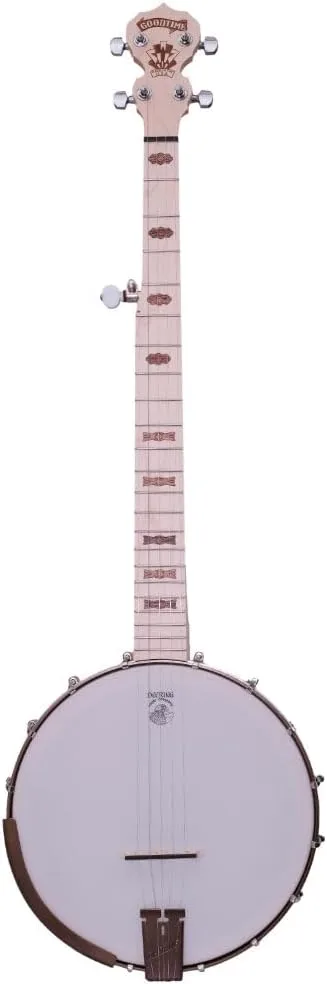
The score rates the instrument on its own terms. The order is what suits a beginner, so a higher-scoring banjo can sit lower if it is the wrong shape for how you want to play — the Deering Goodtime scores above our top pick, but it is an open-back, and most beginners are after the resonator’s bluegrass punch.
1
Best overall
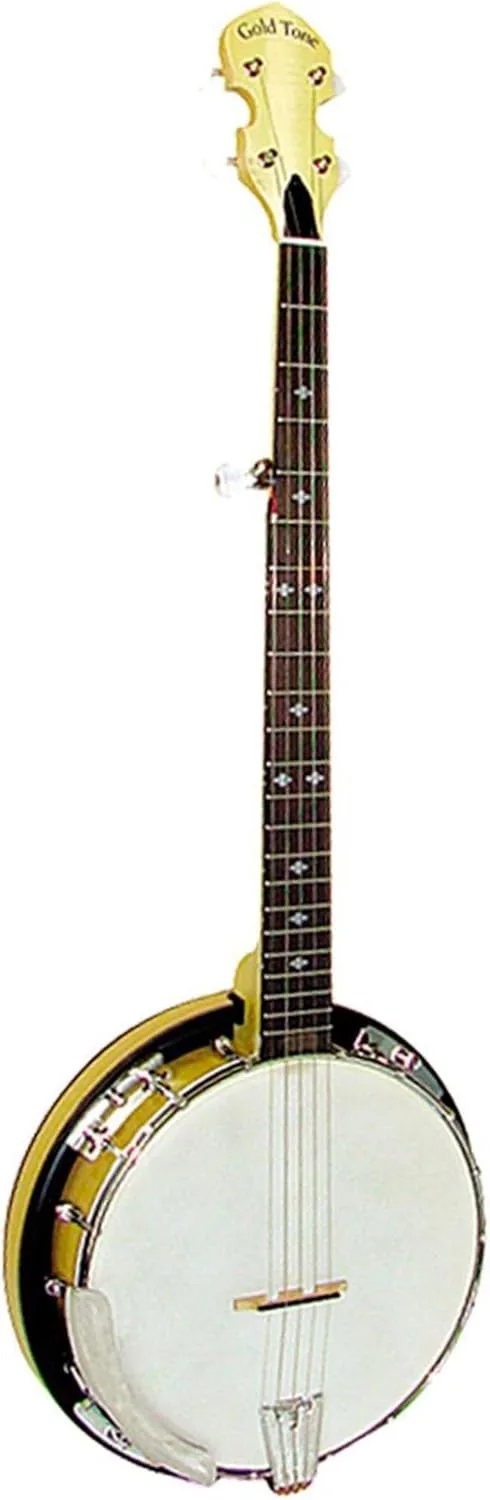
Gold Tone CC-100R
Gold Tone · Maple resonator
4.6/5
Editor's score
The one we hand most beginners. A genuine resonator with the best factory setup in its class, so you play it out of the box instead of paying to fix it first. It sounds like a real bluegrass banjo and stays useful for years.
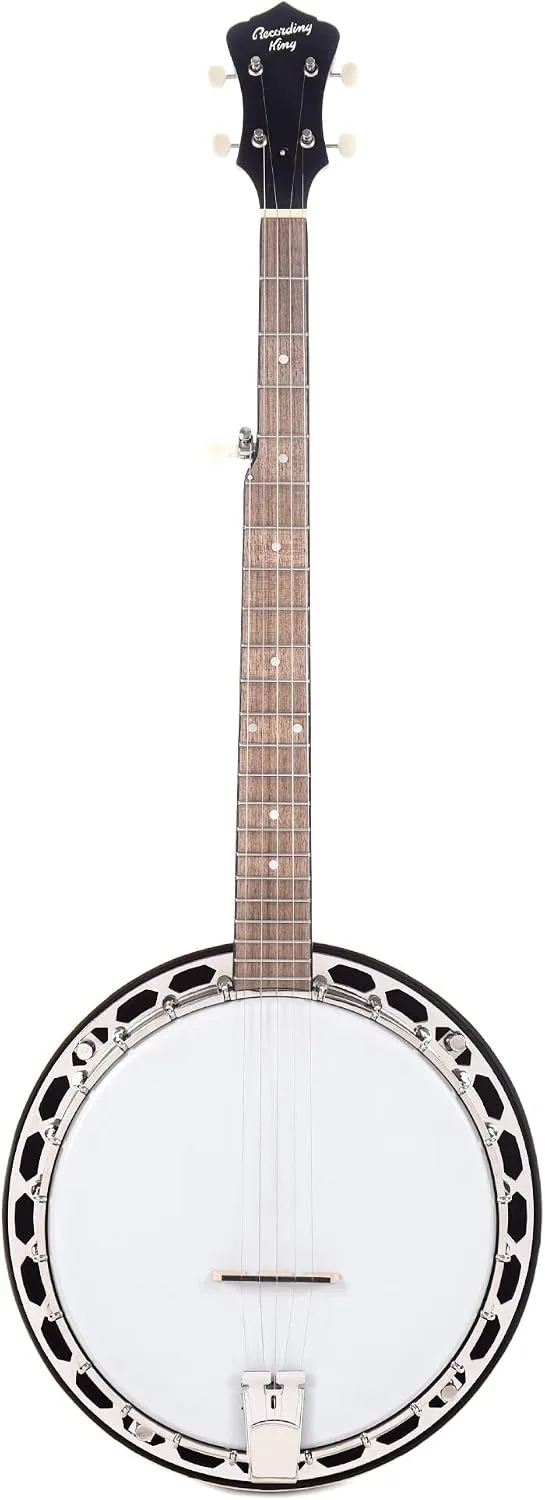
The value play. A rolled tone ring gives it more bark than anything else near $400, and the setup is honest. If money is a little tight but you still want proper bluegrass punch, start here and never feel short-changed.
If clawhammer and old-time is your path, this is the beginner banjo to beat. USA-made, light on the shoulder, and it holds its value like nothing else near the price. Skip it only if you specifically want the louder resonator sound.
Four decisions cover almost everything that matters when you are starting out. Get these right and the rest is detail.
Before you buy
1
Decide resonator vs open-back
A resonator has a wooden bowl on the back that projects sound forward — louder, punchier, the bluegrass sound. An open-back is lighter and mellower, the clawhammer and old-time choice. Pick the one that matches the music you want to play, not the price.
2
Insist on a 5-string
The 5-string with its short drone string is what most people mean by "banjo," and it has by far the most beginner tutorials, tab and songbooks behind it. Save 4-string tenor and plectrum banjos for later if Irish or jazz pulls you that way.
3
Budget for a setup, not just the banjo
A factory banjo often ships with high action and a bridge that is not seated right. A $40–60 setup from a tech lowers the action, seats the bridge and dresses the frets. It changes how the instrument plays more than the last $100 of the price does.
4
Match the spend to your commitment
If you know you are in, buy once in the $400–500 range and skip the upgrade cycle. If you are testing the water, a $149 banjo plus a setup gets you playing honestly and loses little if you decide to resell it.
Before your first lesson
Once the banjo arrives, learn to tune it to open G before anything else — an out-of-tune banjo teaches your ear the wrong thing. If you are still weighing which shape suits you, our guide to the different types of banjos lays out 5-string, tenor, plectrum and banjolele side by side.
The first-week kit
Buy these alongside the banjo and you are set for your first month — a tuner so you always start in tune, picks to get the bluegrass tone, a strap so you can play standing, and a spare set of strings for the day one snaps.
Plan on $150 to $500. Under about $130 you mostly get toys that fight you and put beginners off. In the $400–500 range you get a real resonator, a playable setup, and an instrument you will not outgrow in a year. If money is tight, a $149 Jameson gets you started honestly — just budget for a setup.